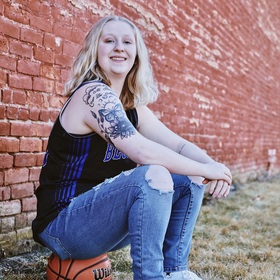
Doc Kieft summer research program sets Monmouth College's students apart
Monmouth, Ill. (07/21/2026) — Most college students would have a difficult time defining such scientific terms as acetylcholinesterase, centrifugation and spectrophotometrically. For a group of nine Monmouth College students, though, the meaning of those words have been etched into their brains during the intensive eight-week Doc Kieft Summer Research Program, an annual education experience on campus.
"By the end of the summer, you'll know more about your project than I know about your project," predicted chemistry professor Audra Goach in early June when she introduced the students to a group of visiting alumni.
Those chemistry terms and many more, including phospholipid rafts, dimerize and chalcones, also flow right off their tongues, which is important, since the students each gave 15-minute presentations about their work on July 15 in the Pattee Auditorium of the college's Center for Science and Business.
"Talking about their research sets them apart from everybody else," said Goach. "The one thing I'm 100% sure of is this research project is unique from other small colleges."
Its advantages are many, including the opportunity to share with other faculty and with their peers.
"Every time you give a talk, you get a lot of ideas for further research," said Goach as she played the role of host for the presentations.
Although the terms themselves might have been over some audience members' heads, there were also some easily recognizable items, such as Bulgarian yogurt, fluoride, sourdough starters, and flea and tick medication.
The latter item was the center of Natalie Gonzalez's research project, which included creating a canine model skin membrane to test a variety of medications. Gonzalez was one of seven rising seniors who participated in the Doc Kieft program, along with Larry Kamara, Victoria Plue, Clayton Rentschler, Ivana Stefanova, Terra Stephens and Ethan Wright. The two rising juniors were Chelsea Lyle and Bella Moore.
Gonzalez said the summer experience allowed her to go beyond the structure of the fall and spring semesters.
"I enjoyed designing my own experiments versus what happens in class or in labs, then tweaking things along the way as I figured things out for myself," she said.
Many students continued work from previous summer programs, including Moore, whose work on synthesizing chalcones could have repercussions for Alzheimer's research. At the conclusion of her presentation, she thanked alumni Mamie Ambrosch '21 and Julia Bean '24 for their earlier contributions.
This year's participants may have hunkered down in the chem lab for hours at a time this summer, but during the actual school year, they have all sorts of involvements, from starring on the tennis team, to executive roles in student government, to leading the Red Hot Scots dance team, which is one of Moore's activities.
How does that sound?
Added to the Kieft presentations this year were similar talks by two participants in the recently funded S-STEM program for academically excellent, low-income students.
For over a decade, physics professor Chris Fasano has led a lightning research project that includes sensors which collect information every 30 seconds.
"We're drowning in data," said Fasano as he introduced rising sophomore Gavin Streets Wood. "We need a different way of managing all of it. Gavin is helping us with that."
The other S-STEM presenter was rising sophomore Dylan Marr, who rocked out on his guitar during the day's final presentation. Under the direction of computer science professor Logan Mayfield, Marr achieved the surf tone he desired for his "SlamWave" guitar pedal, which he constructed from scratch (with lots of soldering).
Remembering Doc, and Knox partnerships
Jeff Draves, who is assisting professors Goach, Laura Moore and Michael Prinsell by teaching physical chemistry - in addition to his main institutional research role on Monmouth's staff - was a student of Kieft's and later his faculty colleague.
"Doc was always awesome when things went sideways," Draves said of the beloved professor and college trustee who died in 2009, leaving behind the $2.3 million gift that makes the summer research program possible. "He'd say, 'It's OK, you can recover from this.' He had the capacity to see through to what was important."
Kieft's gift provides for travel opportunities, scholarships and research supplies, in addition to the summer program. Other financial support for summer research comes from a fund created by 1962 graduate Ken Knox, who had a four-decade career with Abbott Labs.
The chemistry department also has a partnership with another Knox - the neighboring college - which houses a 400-MHz nuclear magnetic resonance spectrometer. Monmouth and Knox worked together to submit a grant to obtain the machine, which Moore used in her research.
Moore also commented on another travel opportunity, which took the Kieft students to the University of Iowa. It occurred on the same day as the EF1 tornado that hit Monmouth. Technically, the group was safer on the road to Iowa City than they would've been on campus, but that didn't stop Moore - and her fellow students - from looking out of the van and fearing "impending doom" from the ominously dark sky.
That scary story aside, Goach offered a final word on the value of the Kieft program.
"Research is important for students to help them learn where their passion lies," she said. "I think that's something else that makes our program special. We will mentor them whatever path they choose, but that path might change. We open their eyes to jobs and paths they didn't even know were possible."
Media Attachments
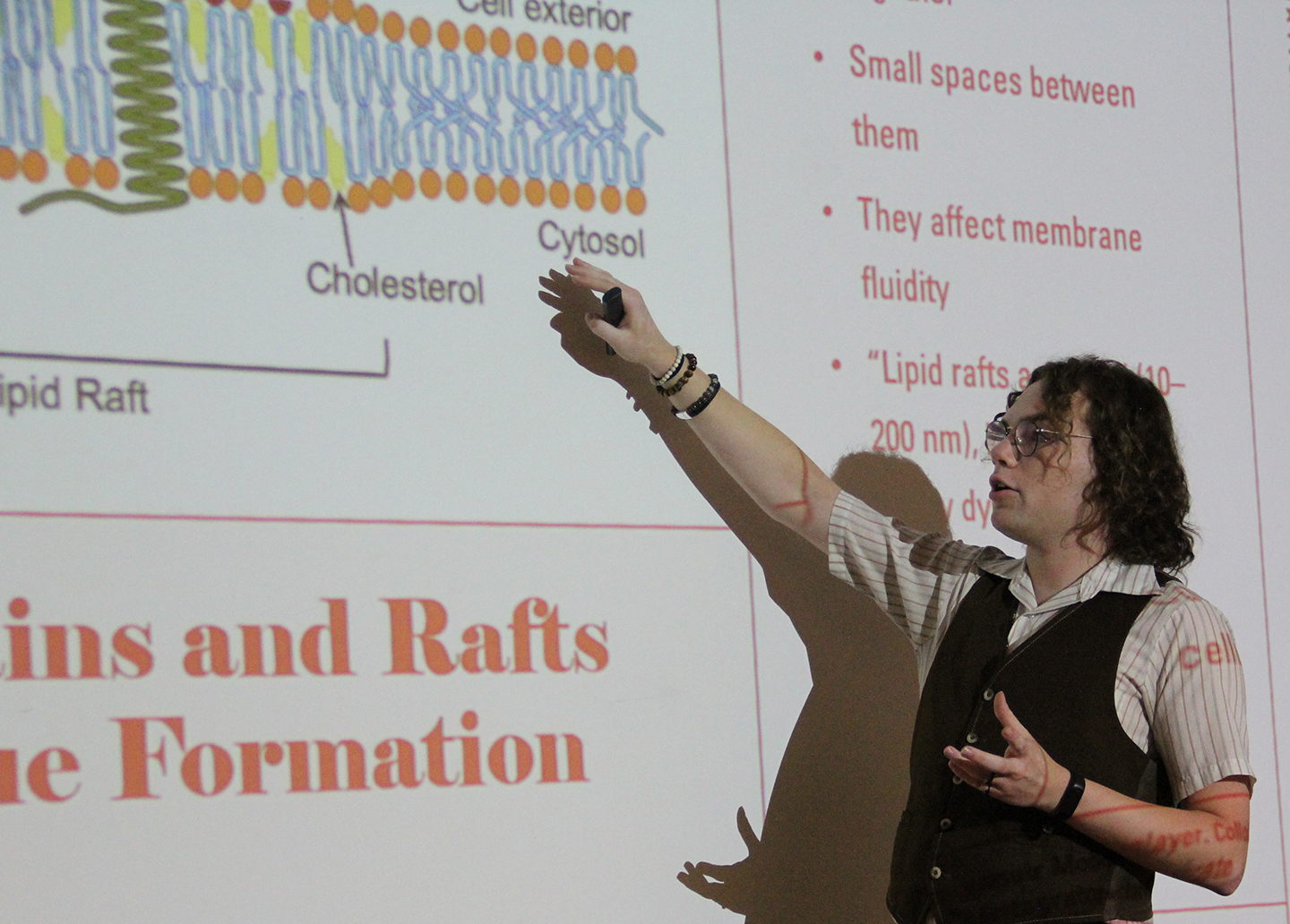
DOC KIEFT TALKS: Terra Stephens '27, whose research was on Alzheimer's plaque disruptors, gestures to one of his slides during his July 15 presentation.
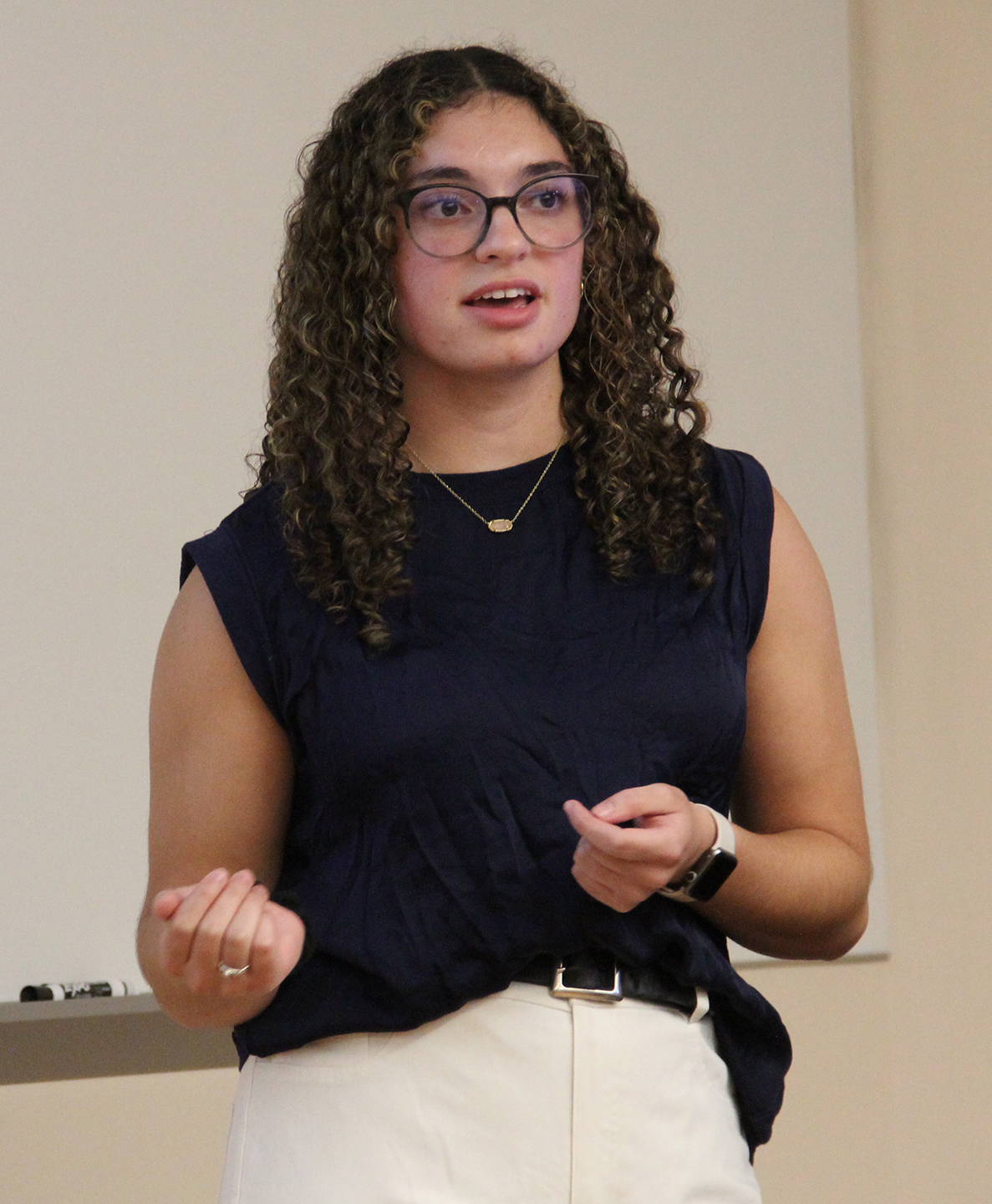
NATALIE GONZALEZ: The rising senior from Galesburg, Illinois, investigated a variety of flea and tick medications.
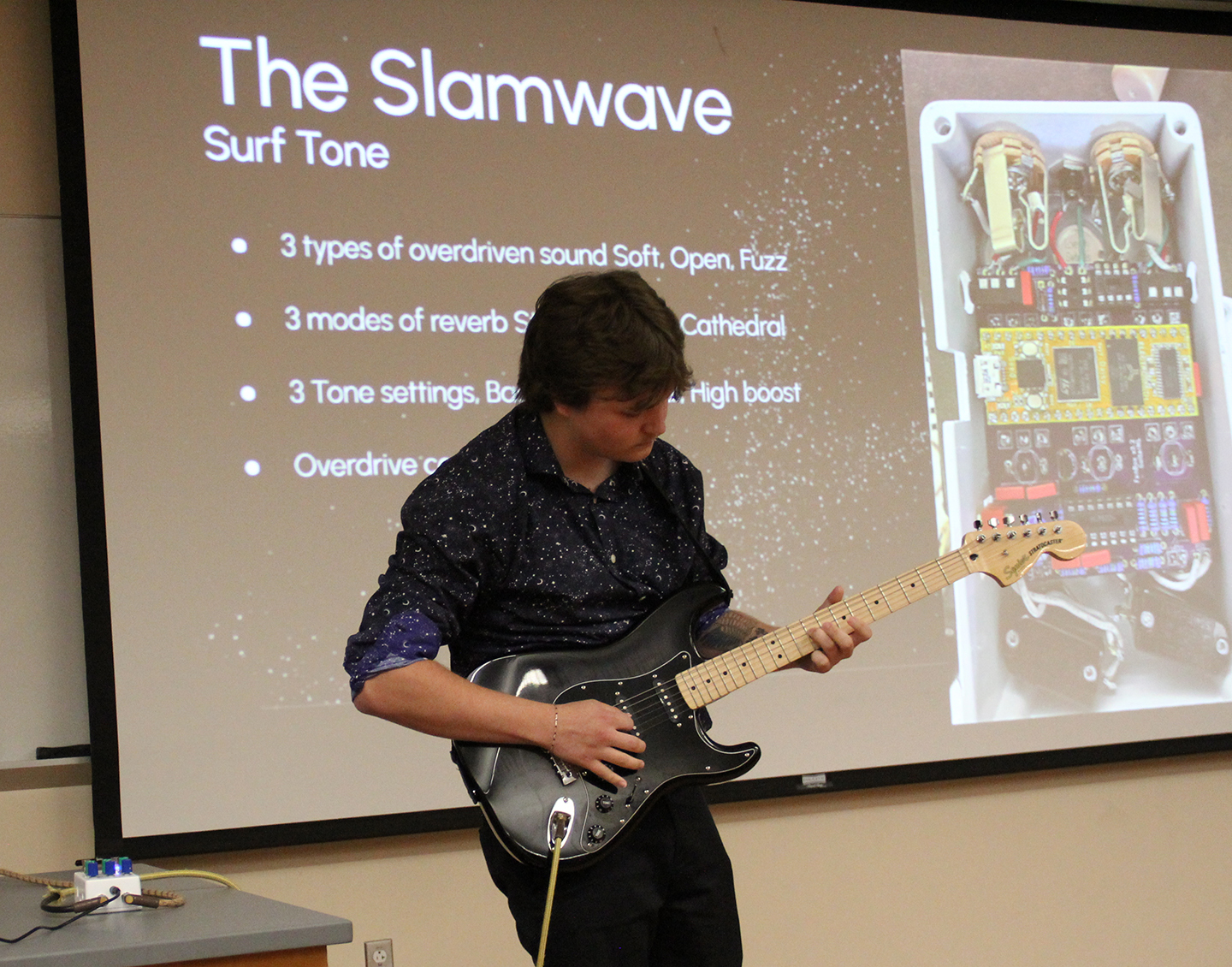
SOUND GOOD? Dylan Marr '29 of Aledo, Illinois, brought an aspect of Michael J. Fox in "Back to the Future" to his presentation on building a guitar pedal from scratch.