Godde's travels: Monmouth professor turns the world into his laboratory
Monmouth, Ill. (02/24/2026) — For most professors, teaching happens inside four walls. But for Monmouth College biology professor James Godde, teaching happens across continents.
When reflecting on his 20 years leading student travel, Godde admitted, "That's a hard question," when asked which trip stands out most. But as a biologist, his answer became clear: "I'd have to say the Galapagos Islands (2011). That's probably the most relevant destination to my teaching."
For someone who studies life, evolution and ecosystems, few places carry the same scientific weight as the Galapagos. It's not just a beautiful location - it's a living classroom.
'A great profession for travel'
For Godde, travel isn't separate from his profession. It's woven into it.
"After my first trip, it hit me that this is a great profession for travel," he said. "We have specific periods set aside for such travel and an ever-changing pool of students who want to see the world. There isn't a single place that we could travel to that doesn't have something interesting to see in terms of biology."
Some of his favorite trips are deeply tied to his students.
"Continuing with my biology theme, the first trip that I led at Monmouth (to Costa Rica in 2009), as well as my trips to Borneo (2014) and Sumatra (2018) particularly stand out as favorites," said Godde, who has left the country at least once every year since 2006.
Those destinations offered extraordinary biodiversity, but what made them unforgettable was guiding students through those experiences, he said.
The sultan of travel
Along the way, there have been moments that sound almost unreal. For example, Godde keeps a picture of the Sultan of Brunei on his desk, recalling, "During their Eid celebration, everyone in Brunei is invited to the palace for a feast. I met the Sultan and had a brief conversation with him."
It's not every day that a biology professor finds himself in a royal palace. Other memories are lighter but just as lasting. Reflecting on the many unexpected moments that happen during student trips, he laughed and said, "There's too many to count! Students who come on my trips do so with an understanding that they may later star in my great stories."
One such story involves a student who lost her phone, seemingly for good.
"I will never get tired of telling how Madison lost her phone on the side of a Peruvian highway in the middle of nowhere, only to retrieve it the next morning using high tech methods," said Godde.
Food has also left its mark on his travels. When asked about the best meal he's ever had on foreign soil, Godde recalled his first student trip to Japan in 2006.
"We were served a meal by maiko (geisha in training) in the Gion district of Kyoto. It's been hard to beat that meal ever since."
Not every trip has been effortless. Godde said the 2020 journey to Belize and Guatemala topped that list due its unique challenges.
"Belize and Guatemala, mainly because we had 30 people on that trip," said Godde. "I have a hard time turning students away, but 30 was way too many." Even in challenging circumstances, though, Godde continued to prioritize giving students the opportunity to experience the world.
How the other half lives
Travel has also shaped his worldview. In particular, visiting developing countries has changed how Godde sees life beyond academia.
"Traveling to developing countries has made me more grateful for what I have and has reinforced my belief that money doesn't buy happiness," he said.
Godde's hope is that students walk away with more than academic knowledge.
"My goal is to build self-confidence in students after they make it through the challenges of international travel and to instill in them the same love of travel that I have." And, according to him, that goal is often realized: "Students often express that both of these things came to pass."
Even after two decades, Godde is not slowing down. He plans to make a return trip to Iceland in 2027, something he rarely does.
"Returning to the same country is very rare for me, but I felt that two weeks there in 2023 was nowhere near enough time to see all the highlights." In fact, he jokes about calling it "reverse Iceland," since he will travel its ring road in the opposite direction.
There is still one destination on Godde's list that remains unfinished business.
"I would love to see Rapa Nui (aka Easter Island). Its remoteness means that it would be an expensive trip, but this remains a bucket list item for me."
For Godde, biology is not confined to lectures or laboratories. It lives in rainforests, volcanic islands, palace courtyards and even along remote highways. Through travel, he teaches more than science - he teaches curiosity, resilience and perspective. In his classroom, the world itself is part of the syllabus.
Media Attachments
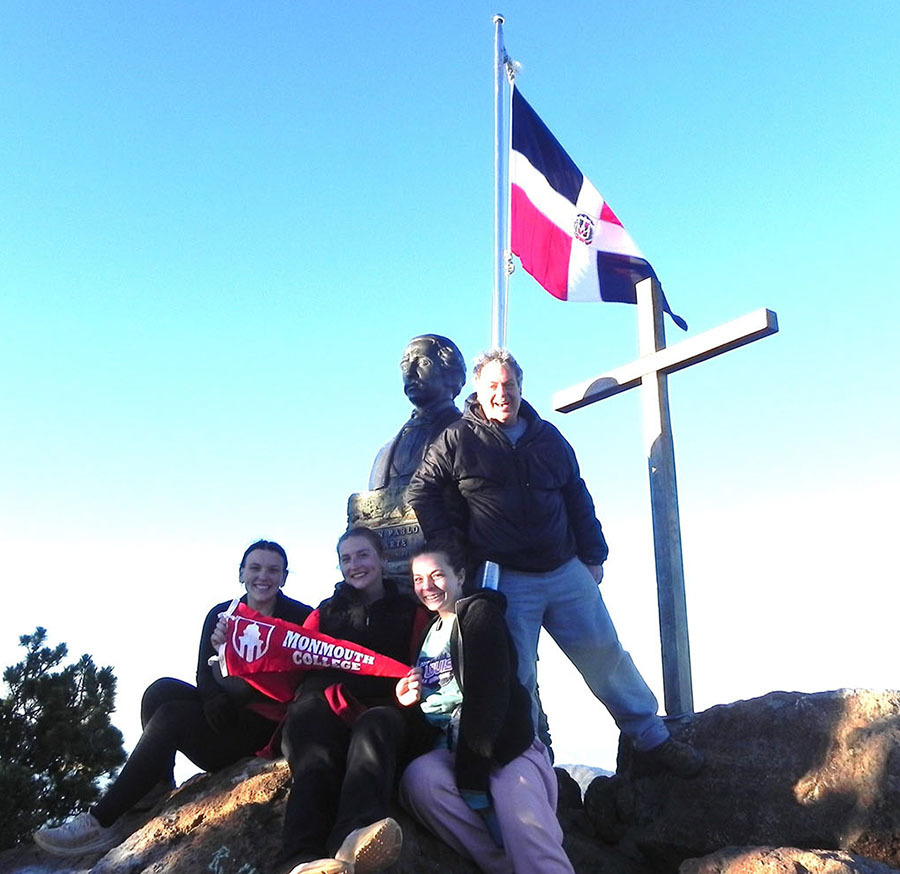
ANOTHER HIGH POINT: In 2024, Godde and his students reached the top of Pico Duarte, the highest point in the Dominican Republic.
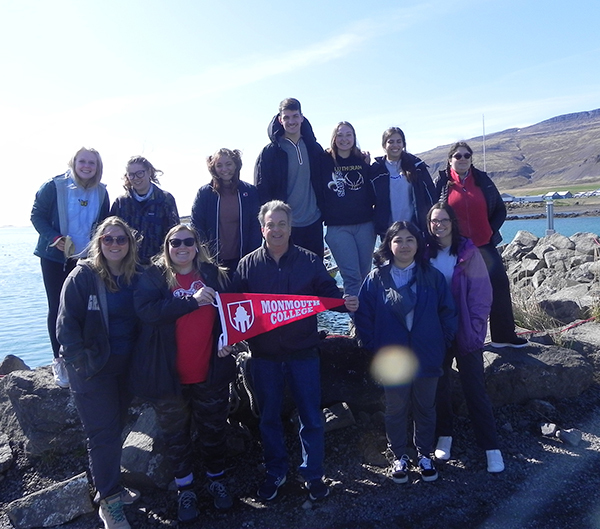
I WANNA GO BACK TO OL' ICELAND: Godde was there with students in 2023, but he hopes to break one of his travel rules and return soon.