Monmouth College physics professor Mike Solontoi discusses new era of astronomy
Monmouth, Ill. (05/20/2026) — For astronomers around the world, the opening of the Vera C. Rubin Observatory in Chile marks the beginning of a new chapter in humanity's understanding of the universe.
After more than a decade of construction, the observatory is now ready to launch a project expected to transform modern astronomy through an unprecedented stream of images and data. Monmouth College physics professor Mike Solontoi has been contributing to and closely following the project for more than 20 years.
"First, after a decade of construction, the observatory is complete and about to start the 10-year Legacy Survey of Space and Time," Solontoi said. "Second, the observatory has begun to produce public alerts."
Those alerts are one of the observatory's most groundbreaking features. By repeatedly imaging the night sky, Rubin automatically searches for changes such as moving asteroids, brightening stars, exploding supernovae and other transient cosmic events. The system then sends real-time alerts to scientists around the world for immediate follow-up and study.
Leveling up discoveries, astronomically
For Solontoi, several early discoveries have already stood out.
"I mainly work on the Solar System, so the two that stand out to me right now are the detections of the third comet from outside the Solar System, 3I/Atlas, that resulted in the very first publication using the fully complete Rubin Observatory, and the discovery of two ultra-fast spinning asteroids," he said. "Those discoveries indicate that these objects are much less rare than we previously thought and could have implications for our understanding of asteroid structure."
Scientists believe the Rubin Observatory could fundamentally reshape our understanding of everything from dark matters to the formation of the Milky Way.
"One way to think about the Rubin Observatory is that it will produce a 10-year 'digital movie,'" Solontoi explained. "It will image the entire southern sky every three to four nights for the next decade."
That continuous survey will allow astronomers to study billions of galaxies, map dark matter using weak gravitational lensing, and investigate the accelerating expansion of the universe caused by dark energy. Rubin is also expected to dramatically expand the known inventory of the Solar System by discovering millions of new asteroids, comets and trans-Neptunian objects.
In addition, the observatory will detect millions of transient events every night, including exploding stars and variable stars that brighten or dim over time. Rubin will also catalog roughly 17 billion stars within the Milky Way, providing researchers with new insight into the structure and evolution of our galaxy.
Much of the observatory's revolutionary potential comes from its extraordinary technology. Unlike other tools such as the Hubble Space Telescope or the James Webb Space Telescope, which focus deeply on relatively narrow sections of space, Rubin is designed to repeatedly scan enormous portions of the sky.
The observatory uses the world's largest digital camera, a staggering 3,200-megapixel instrument capable of imaging sky areas 40 times larger than the full moon in a single shot. Every night, Rubin will process more than 20 terabytes of data while continuously generating alerts about changing celestial objects.
"In the first year alone, Rubin will collect more data than all astronomical surveys combined," said Solontoi.
An opportunity for Monmouth students
The observatory's impact will extend far beyond professional astronomy laboratories. Solontoi is already helping prepare undergraduate students to work directly with Rubin data.
"One of the projects that I'm involved with is the Rubin Undergraduate Network," he said of a project focused on creating accessible research opportunities and tutorials for students. "I'm in the process of writing undergraduate-accessible tutorials and guided projects for getting involved with Rubin science."
Solontoi believes the observatory will reshape astronomy education for current students at Monmouth.
"Honestly, this facility will change the way astronomy is done, and students at Monmouth have a great opportunity to work with it as it happens," he said.
For Solontoi personally, the observatory's opening represents the culmination of decades of work and anticipation.
"I've been involved with the Rubin Observatory for over 20 years, and the fact that it has now opened its eye to the night sky is incredibly exciting for me," he said. "The sheer volume and quality of data it will produce is going to change the way we do astronomy, and honestly I look forward to the parade of discoveries made by people working with this data set, some of which are going to be things that we haven't even thought of yet."
Media Attachments
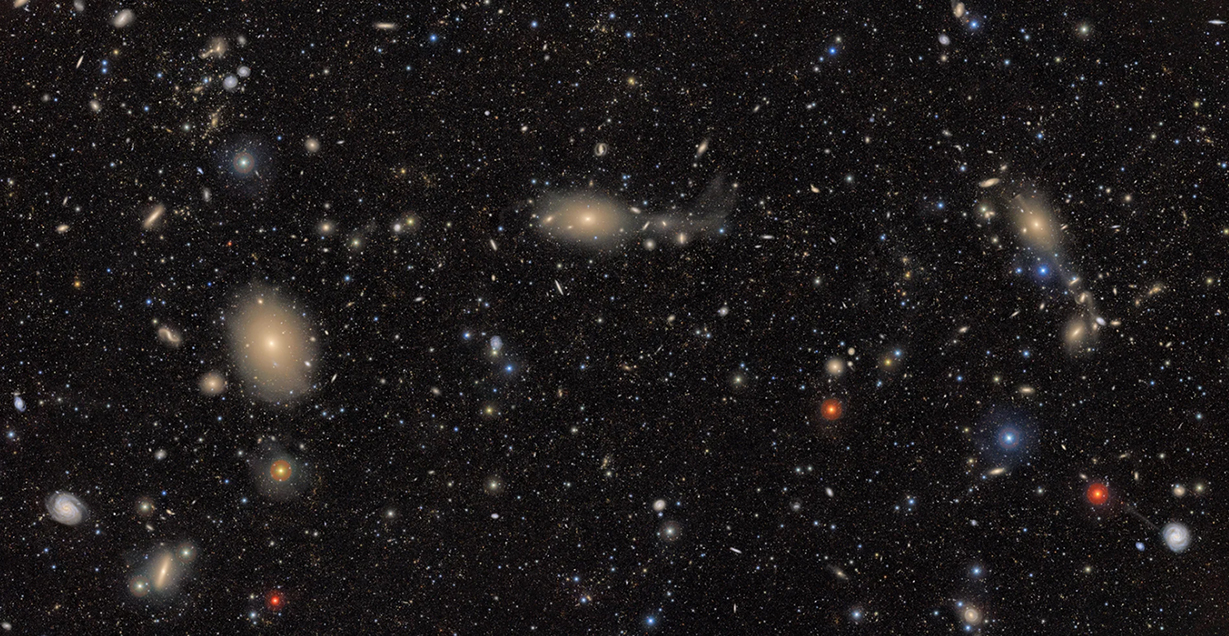
COSMIC TREASURE CHEST: Made from over 1,100 images captured by NSF-DOE Vera C. Rubin Observatory, this image contains an immense variety of objects, demonstrating the broad range of science Rubin will transform with its 10-year Legacy Survey of Space and Time.

MIKE SOLONTOI: “I've been involved with the Rubin Observatory for over 20 years, and the fact that it has now opened its eye to the night sky is incredibly exciting for me."
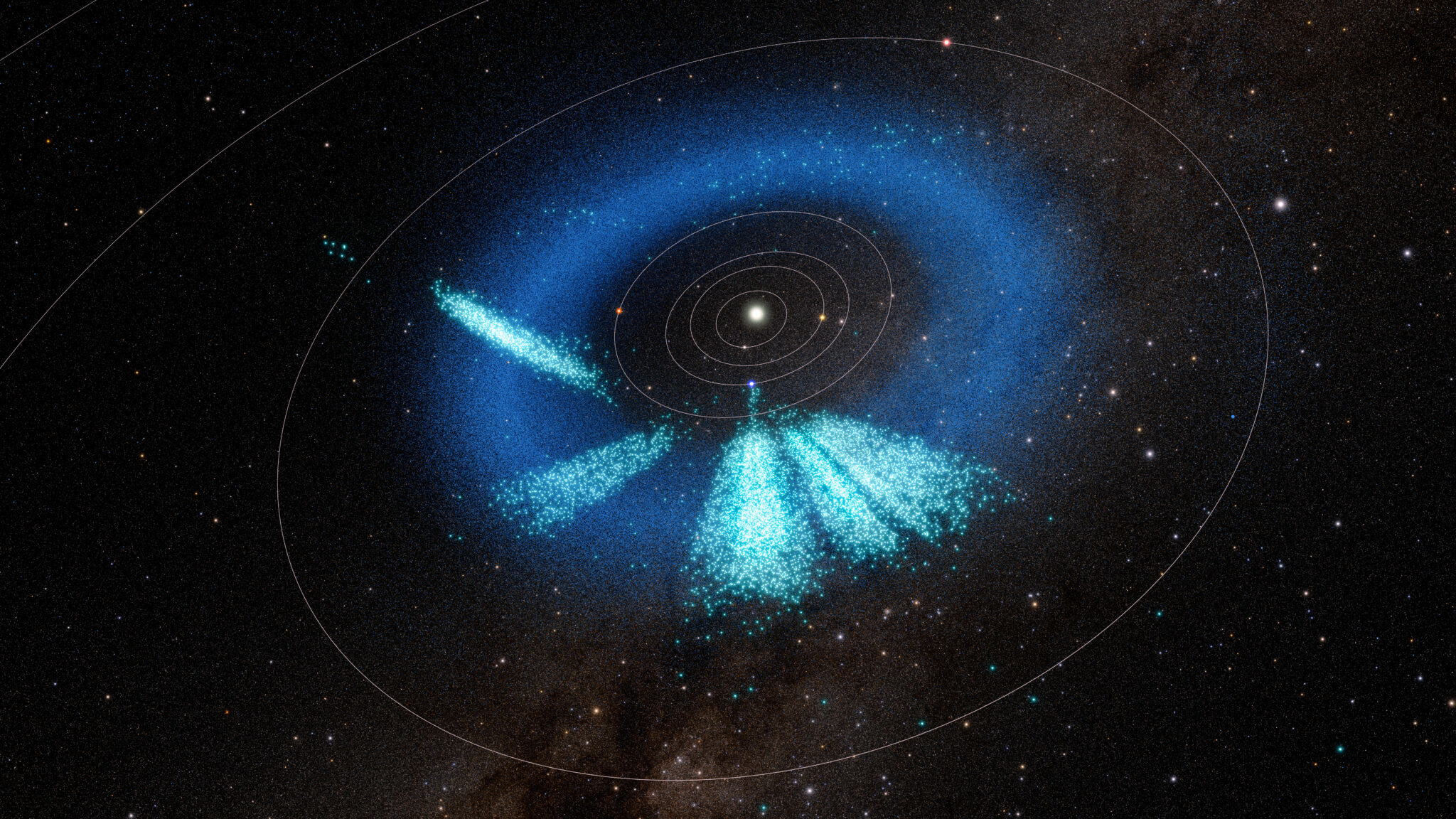
ASTEROID MAP: A model of the inner Solar System showing the asteroids discovered by Rubin in light teal. Known asteroids are dark blue. The model shows a total of almost 12,700 asteroids that were discovered with Rubin over the span of 1.6 years: These are the August 2025 locations of the discovered objects. CREDIT: NSF–DOE Vera C. Rubin Observatory/NOIRLab/SLAC/AURA.