Two Monmouth College neuroscience students have valuable experiences in Oregon, New York
Choity, from Bangladesh, was in Portland; Wauconda's Aldrich studied in Rochester
Monmouth, Ill. (10/01/2026) — Two Monmouth College neuroscience students spent their summers exploring very different sides of the brain, one studying Alzheimer's disease in a neuroscience research institute in Oregon and the other combining neuroscience and artificial intelligence in New York.
Jesia Hossain Choity '27 of Bangladesh was at the Vollum Institute at Oregon Health & Science University in Portland, while Lauren Aldrich '28 of Wauconda, Illinois, explored computational sensing for human-centered AI at the Rochester Institute of Technology through a Research Experience for Undergraduates program.
Although their projects looked very different, both experiences gave the students an opportunity to take what they had learned at Monmouth into larger research environments.
"Neuroscience is an incredibly broad and interdisciplinary field, and Jesia's and Lauren's experiences this summer reflect that diversity," said Monmouth professor Janet Ugolino. "There is something special about working on projects at major research universities and institutes. These experiences allow students to see firsthand what graduate-level research is like, collaborate with experts who are advancing the field, and gain a deeper understanding of potential career paths in neuroscience."
Choity spent the summer working in Skyler Jackman's lab at the Vollum Institute, where her research focused on Alzheimer's disease and the possibility of restoring a protein involved in communication between neurons. Using a mouse model of Alzheimer's disease, Choity studied whether restoring the presynaptic protein synaptotagmin-7, or SYT7, through gene therapy could improve behaviors associated with the disease.
Getting to the Vollum Institute, however, was the result of a few years of persistence.
"I have always wanted to have professional lab experience at a major research institution with more research facilities," Choity said. "As an international student, finding programs I was eligible for was comparatively difficult, so I kept searching and applying to programs every year."
After receiving summer internships from the Mayo Clinic and OHSU, Choity chose the Pacific Northwest. Her days began around 7:30 a.m. at Portland State University, where the summer interns lived. From there, she commuted to OHSU's hilltop campus and usually worked from 9 a.m. to 5 p.m. Days involving experiments could stretch longer, occasionally until around 9 p.m. But she said the long hours rarely felt like a burden.
"Working in the Jackman lab was so much fun," Choity said. "There were eight of us, and even when I had to spend more hours there, I didn't really mind."
The summer marked Choity's first time conducting research with mice. Much of her previous research with Ugolino used the microscopic roundworm C. elegans to investigate neurodegenerative disease.
Working with mice requires additional training and a different approach, said Choity. "They are much more sensitive animals to work with and respond to human beings, so we had to get them used to us."
Some of the skills she needed in Oregon, however, were already familiar. Choity credited her research through Monmouth's Doc Kieft Summer Research Program with teaching her how to develop experiments, analyze scientific literature, and think through why particular procedures are necessary. Laboratory courses also proved useful, particularly when she needed to perform techniques, such as polymerase chain reactions.
"A big part of my research was developing experiments and procedures, which requires breaking down research papers and understanding what I should do and why," Choity said. "That is something I learned through Doc Kieft research. I'm very grateful to Dr. Ugolino, because whatever I'm capable of doing in research was firsthand taught by her."
Nearly 2,600 miles away, Aldrich was exploring another side of neuroscience in Rochester. As part of RIT's REU program, she worked on a NeuroAI-inspired project that used principles from neurobiology to develop a more energy-efficient computational model.
The opportunity came to her through Ugolino, who had learned about an REU combining neuroscience and computer science and thought it could be a good match. That combination proved especially important for Aldrich, who was able to bring neuroscience knowledge to a research group whose other undergraduate members came primarily from computer science backgrounds.
"My favorite part of this internship was being able to fully lean into the neuroscience side of things," she said. "Being able to expose them to technical neuroscience terms and concepts was really rewarding to me. Overall, the project was also a very satisfying blend of my two passions."
Her typical day was also 9 to 5 in the lab, where each member of the group had access to a desktop computer and a graphics processing unit, or GPU, used to train and test their model. Their research mentor regularly met with the group to discuss progress, introduce new concepts and work through code. Aldrich would often return to the lab after dinner to continue longer computational tasks.
The experience also introduced her to Linux, an operating system she had previously learned about in computer science courses but had never regularly used. "There was definitely a learning curve to it, but I feel nearly as confident in Linux as I do in Windows now," she said.
Like Choity, Aldrich found that one of the most valuable skills she brought from Monmouth was the ability to work with scientific literature. "We were constantly finding new articles to inspire different directions to take or methods to implement," she said. "Being able to quickly and efficiently read and take notes over several articles a week expedited this process for my team."
Different research, but shared foundation
For Ugolino, the two summer experiences demonstrate why Monmouth's neuroscience program was built around multiple disciplines.
"Our neuroscience program was intentionally designed to expose students to the interdisciplinary nature of the field," she said. "Combined with a strong liberal arts background, that preparation makes our students highly competitive candidates for summer research programs like the ones Jesia and Lauren participated in."
Research experiences, Ugolino said, allow students to move beyond learning established scientific concepts and begin participating in the process through which those concepts are discovered.
"Classroom learning provides students with the foundational knowledge they need, but research experiences allow them to apply that knowledge," she said. "Through these types of experiences, students learn how science is actually conducted. It reinforces what they learn in class, but also helps them develop confidence and independence as scientists."
For both students, the summer offered a glimpse of what could come after Monmouth. Aldrich entered the program expecting she might pursue molecular neuroscience in graduate school and use her computer science background when applicable. Her experience introduced her to a field where they could be combined directly.
"Having been exposed to this field that perfectly combines my two interests, I'm leaning more heavily toward pursuing a graduate degree in computational neuroscience and centering my career around that," she said.
For Choity, the experience didn't change her desire to pursue neuroscience. Instead, it strengthened it. "It made me more motivated than ever before," she said. "Being exposed to such a diverse research environment made me realize how much more can be done in neuroscience and why we should keep doing it." She's now particularly interested in clinical and cognitive neuroscience and neurodegenerative disease research.
But some of the most important lessons from the summer had little to do with experiments. Aldrich entered a group where others had more extensive computer science experience. Rather than allowing that difference to discourage her, she learned to rely on her work ethic and willingness to learn from the people around her.
"I felt very behind everyone entering the REU because they were all more developed in their computer science knowledge and experience," she said. "Being able to learn from them and not just feel intimidated and close myself off was crucial."
Choity came away with a similar appreciation for the people behind science. "Working in a big lab with professional scientists is actually a completely different scenario. Even though I was working with accomplished people from all over the world, they made the space very easy for me and made sure I could approach them with any questions."
Vollum Institute also gave Choity opportunities to hear from principal investigators, doctoral students and postdoctoral researchers through regular lectures. Even the institute's history occasionally felt close at hand.
"Nobel Prize-winning neuroscientist Erwin Neher, whose work helped establish fundamental methods for studying ion channels in cells, had previously worked in the very next lab," said Choity.
Still, when Choity looked back at the summer, one lesson stood above the prestige of the institution.
"No matter how big the name of a place is, community is the most important," she said. "And more importantly, I made four new friends. Now I have more people to discuss neuroscience with."
Ugolino said watching both students pursue those opportunities has been a source of pride. "These types of programs are highly competitive, so I was thrilled to learn that they were selected to participate," she said. "I'm excited to see how their summer experiences influence their future academic and professional paths."
Media Attachments
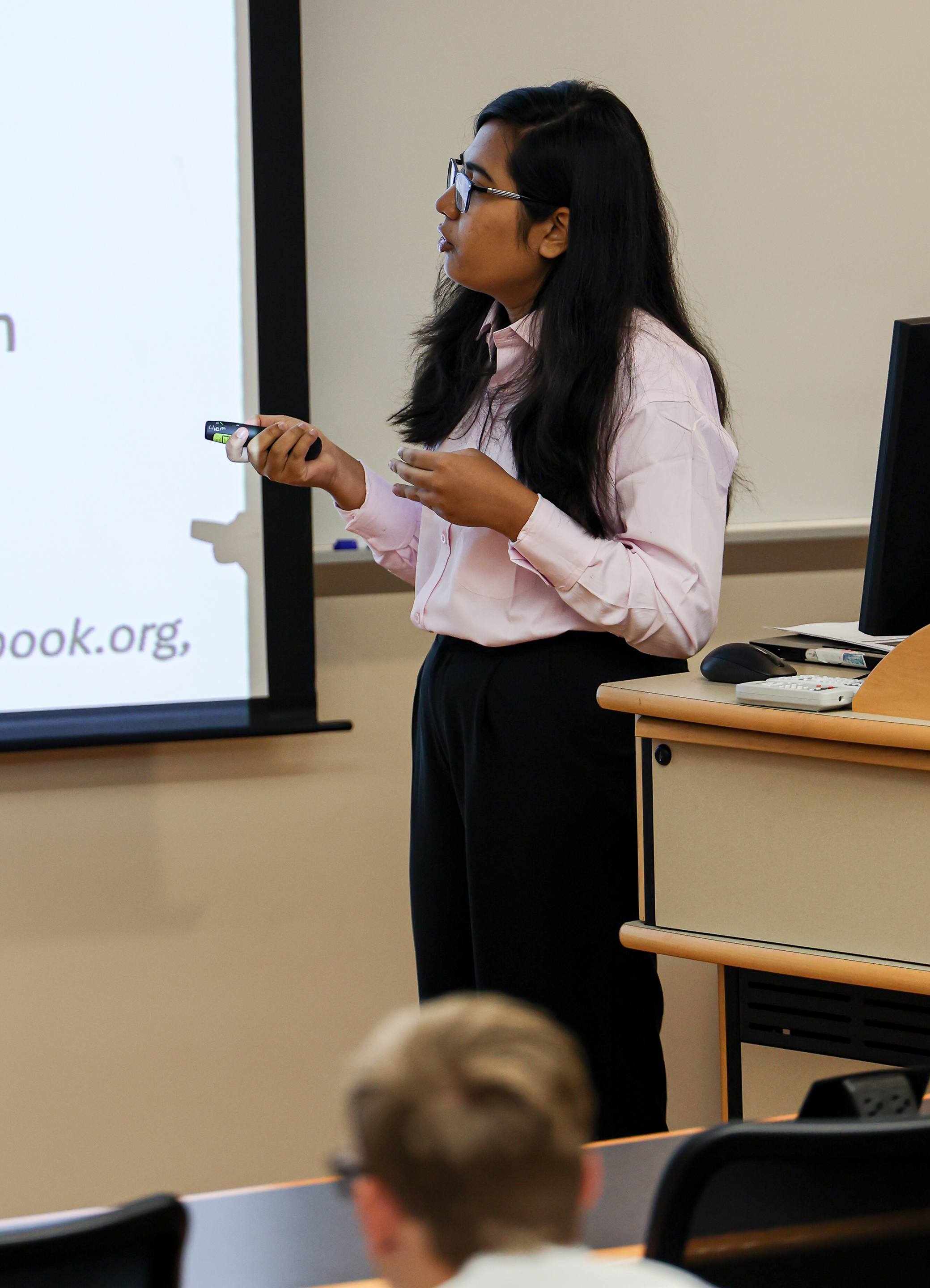
JESIA HOSSAIN CHOITY: In 2025, she spent her summer as a participant in Monmouth's Doc Kieft research program (pictured). In 2026, Choity studied Alzheimer's disease at the Vollum Institute at Oregon Health & Science University in Portland.
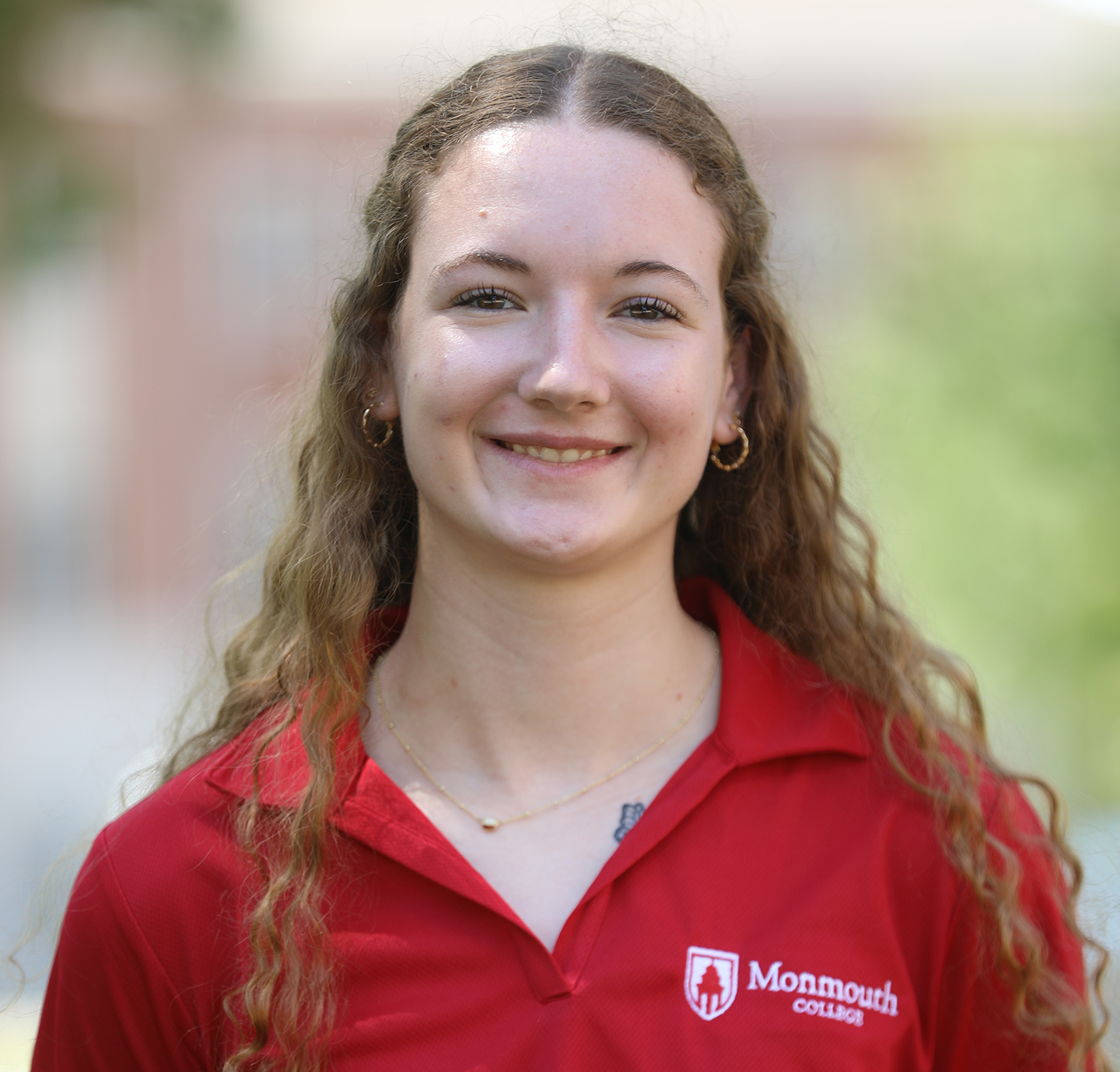
LAUREN ALDRICH: She combined neuroscience and artificial intelligence at the Rochester Institute of Technology through a Research Experience for Undergraduates program.
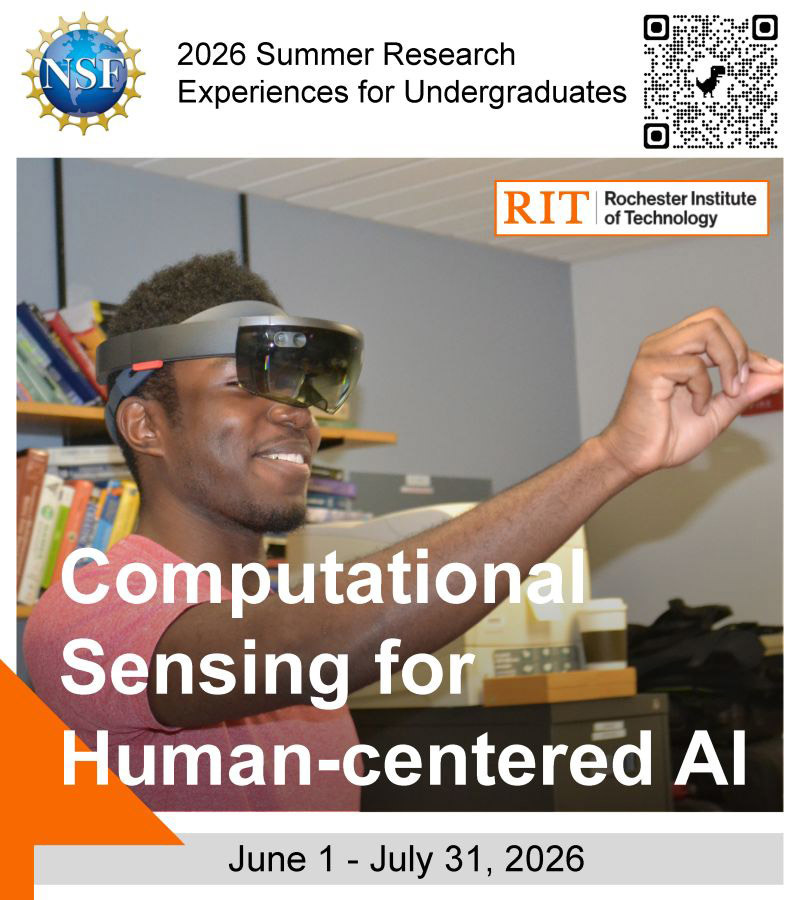
RESEARCH EXPERIENCES FOR UNDERGRADUATES: A poster promoting Aldrich's summer program.